Published 3 Mar 2026

The value of nerve blocks in the lameness examination

An introduction to nerve blocks
Speaker
Jackie Potts
Jackie Potts
William Fox-Pitt's Head Groom

Your vet can watch your horse move, feel for heat and swelling, and flex the joints. But often, the source of pain isn’t obvious. The horse can’t tell us “it’s my fetlock” or “it’s deep in my heel.” So how do we find out?
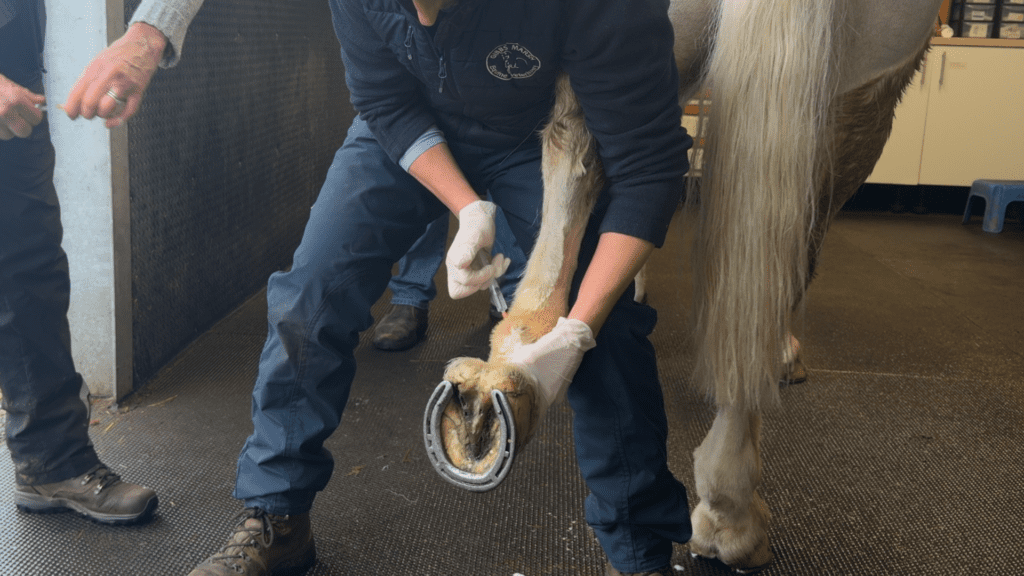
This is where nerve blocks come in.

Nerve blocks – or “diagnostic analgesia” as vets call it – are one of the most important tools in the lameness investigation. By temporarily numbing specific areas of the limb, your vet can work out exactly where the pain is coming from.

Think of it like this: if the lameness disappears when a certain area is blocked, that’s where the problem is hiding.

In this webinar, we’ll walk you through the process in plain, owner-friendly terms.

You’ll learn:

  • What nerve blocks actually are – and how they work
  • Why vets use them – the logic behind “switching off” areas of the limb
  • What happens on the day – the step-by-step process
  • What your vet is looking for – how they interpret the results
  • Perineural vs joint blocks – the difference between blocking nerves and blocking joints
  • What happens next – how nerve blocks guide the next steps in diagnosis

Nerve blocks are a safe, routine part of lameness investigation – and understanding how they work helps you follow your vet’s thinking and stay involved in the process.

When you know where the pain is, you’re one step closer to knowing why.

Jackie Potts
Jackie Potts
William Fox-Pitt's Head Groom
Quiz

Could you spot these signs of lameness in your horse?

This quiz is educational, not diagnostic. It is here to help you spot common patterns owners often miss and feel more confident talking to your vet about what to do next.

Quiz
Articles & Guides

Knowledge Hub

Owner-first guides to help you notice patterns, reduce worry and feel prepared for your next vet visit.

Knowledge Hub

What are the risks of not getting a lameness diagnosis?

Article 10 Jul 2026
Treating without diagnosing can work. But it can also mean months of time, money and effort spent managing a problem rather than solving it, while the underlying cause quietly becomes harder to treat.
Carina Northern Carina Northern

What are the risks of not getting a lameness diagnosis?

Article 10 Jul 2026
Treating without diagnosing can work. But it can also mean months of time, money and effort spent managing a problem rather than solving it, while the underlying cause quietly becomes harder to treat.
Carina Northern Carina Northern

Proximal suspensory injuries in horses

Article 24 Jun 2026
Proximal suspensory injuries are a common cause of lameness and poor performance in horses. Clinical signs can vary depending on whether the forelimbs or hindlimbs are affected, and a thorough lameness examination is essential to localise the source of pain.
Chrysanthi Pitaouli Chrysanthi Pitaouli
signup

Sign Up To Our Newsletter

Megaphone