Published 2 Mar 2026

Using hoof testers to assess foot pain

Using Hooftesters
Speaker
Jackie Potts
Jackie Potts
William Fox-Pitt's Head Groom

Foot pain is one of the most common causes of forelimb lameness, and it can range from a brewing abscess to something more complex like navicular syndrome. The tricky part is that the horse can’t tell you exactly where it hurts. That’s where hoof testers come in.
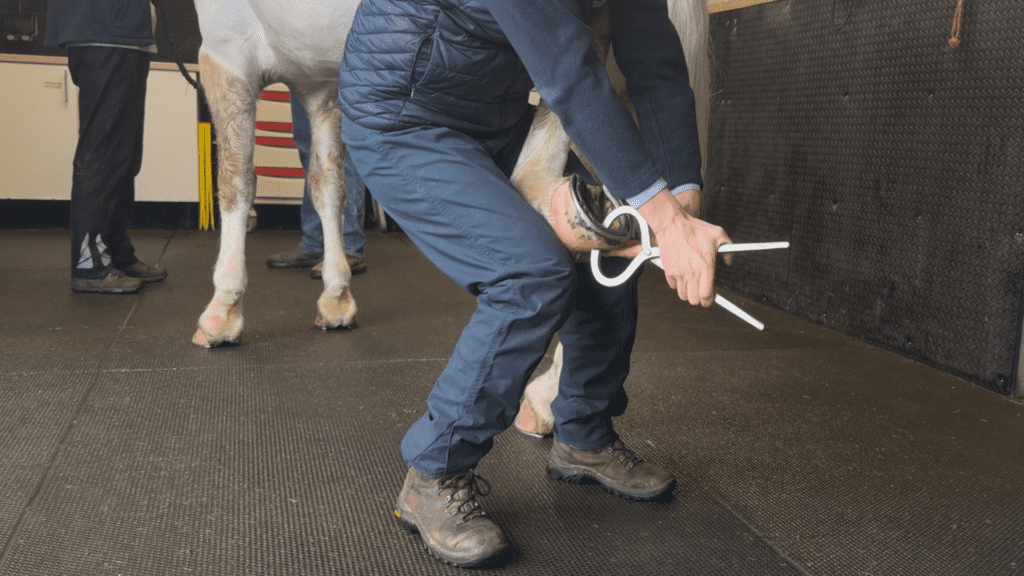
Hoof testers are large, pincer-like instruments designed to apply targeted pressure to specific areas of the hoof. During a lameness exam, the vet systematically squeezes different spots across the sole and hoof wall, watching for a pain response — typically a flinch or withdrawal of the limb. Where the horse reacts can point the vet toward what’s going on inside. Sensitivity over the heel region, for example, may suggest navicular issues, while a sharp response in another area could indicate an abscess or a sole bruise.

It sounds straightforward, but effective use of hoof testers takes real skill and experience. Factors like hoof hardness, sole depth, and even the individual horse’s temperament all influence how they respond. Some horses are stoic and barely react even when in genuine pain, while others flinch at the lightest squeeze. A single withdrawal doesn’t necessarily mean pain — consistent, repeatable responses are what the vet is looking for.

In this video, we’ll show you how veterinarians use hoof testers as part of a lameness workup, what different responses can mean, and why this time-honoured tool remains a valuable first step in tracking down the source of your horse’s discomfort.


Jackie Potts
Jackie Potts
William Fox-Pitt's Head Groom
Quiz

Could you spot these signs of lameness in your horse?

This quiz is educational, not diagnostic. It is here to help you spot common patterns owners often miss and feel more confident talking to your vet about what to do next.

Quiz
Articles & Guides

Knowledge Hub

Owner-first guides to help you notice patterns, reduce worry and feel prepared for your next vet visit.

Knowledge Hub

What are the risks of not getting a lameness diagnosis?

Article 10 Jul 2026
Treating without diagnosing can work. But it can also mean months of time, money and effort spent managing a problem rather than solving it, while the underlying cause quietly becomes harder to treat.
Carina Northern Carina Northern

What are the risks of not getting a lameness diagnosis?

Article 10 Jul 2026
Treating without diagnosing can work. But it can also mean months of time, money and effort spent managing a problem rather than solving it, while the underlying cause quietly becomes harder to treat.
Carina Northern Carina Northern

Proximal suspensory injuries in horses

Article 24 Jun 2026
Proximal suspensory injuries are a common cause of lameness and poor performance in horses. Clinical signs can vary depending on whether the forelimbs or hindlimbs are affected, and a thorough lameness examination is essential to localise the source of pain.
Chrysanthi Pitaouli Chrysanthi Pitaouli
signup

Sign Up To Our Newsletter

Megaphone