Published 2 Mar 2026

Flexion tests for subtle lameness

Flexion tests for subtle lameness
Speaker
Jackie Potts
Jackie Potts
William Fox-Pitt's Head Groom

A horse that’s “just a little off” could be dealing with anything from foot soreness to a joint issue higher up the leg. An early schallenge for a subtle lameness can be devining which leg is painful.

That’s where flexion tests come in. They’ve been a staple of the veterinary lameness exam for decades, and for good reason. During a flexion test, the vet holds a horse’s limb in a flexed position for a set period of time, then immediately asks the horse to trot off. If the horse shows uneven gait for at least 3 strides it can point the vet toward the area that’s causing trouble.
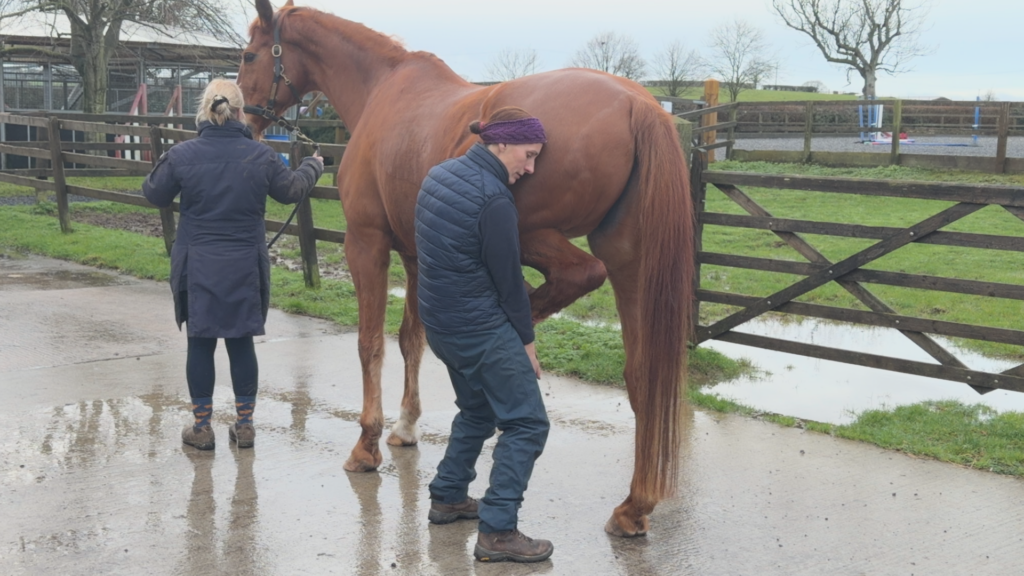
But flexion tests aren’t as simple as they might look. The amount of force applied, how long the limb is held, and which joints are being stressed all influence the result. Because it’s nearly impossible to flex one joint without also putting pressure on surrounding structures, interpreting the response takes real skill and experience. And while a positive result can be a helpful clue, it’s rarely the whole answer on its own — many sound horsesalso show a brief response to flexion.

In this video, we’ll walk you through how vets use flexion tests as part of a complete lameness workup, what they’re actually looking for when your horse trots away, and why these tests remain a valuable — if imperfect — tool in the lameness detective’s toolkit.


Jackie Potts
Jackie Potts
William Fox-Pitt's Head Groom
Quiz

Could you spot these signs of lameness in your horse?

This quiz is educational, not diagnostic. It is here to help you spot common patterns owners often miss and feel more confident talking to your vet about what to do next.

Quiz
Articles & Guides

Knowledge Hub

Owner-first guides to help you notice patterns, reduce worry and feel prepared for your next vet visit.

Knowledge Hub

What are the risks of not getting a lameness diagnosis?

Article 10 Jul 2026
Treating without diagnosing can work. But it can also mean months of time, money and effort spent managing a problem rather than solving it, while the underlying cause quietly becomes harder to treat.
Carina Northern Carina Northern

What are the risks of not getting a lameness diagnosis?

Article 10 Jul 2026
Treating without diagnosing can work. But it can also mean months of time, money and effort spent managing a problem rather than solving it, while the underlying cause quietly becomes harder to treat.
Carina Northern Carina Northern

Proximal suspensory injuries in horses

Article 24 Jun 2026
Proximal suspensory injuries are a common cause of lameness and poor performance in horses. Clinical signs can vary depending on whether the forelimbs or hindlimbs are affected, and a thorough lameness examination is essential to localise the source of pain.
Chrysanthi Pitaouli Chrysanthi Pitaouli
signup

Sign Up To Our Newsletter

Megaphone