
It’s not just humans that feel more aches and pains as they get older! Your horse may well be showing signs of aging in small and often subtle ways that are all too easy to overlook. When it comes to lameness diagnosis, knowing your horse’s age can help your vet give the right treatment.
Age can help shape the probable causes of lameness and guide the next steps in diagnosis and care. Recognising symptoms and patterns that are normal for your horse and those that signify something more serious or that needs attention, will help you and your vet in getting the right answers, without guesswork.
Why age is such a powerful clue
Lameness isn’t a disease; it’s a sign that something hurts or isn’t working as it should within the musculoskeletal system: hooves, tendons, ligaments, joints, muscles, even the back or neck. The likely culprit shifts with age, and vets use that context to narrow possibilities quickly and choose the most useful and informative tests first.
- Older horses: more often show chronic or degenerative issues. For example, arthritis (degenerative joint disease), age‑related tendon or ligament weakening, or PPID (Cushing’s) associated laminitis risk. These problems tend to build gradually, so signs can be subtle: shorter steps, stiffness after rest, reluctance to bend, or a quiet change in demeanour.
- Younger horses: are more likely to face acute injuries from training, turnout mishaps or workload changes. Think tendon or ligament strains, bruised soles, or developmental issues. Their onset is often faster, more obvious, and can be managed in the shorter term for an effective outcome.
A better understanding of age related patterns of movement and pain-related behaviours will help both you and your vet to move with purpose rather than uncertainty.
Older vs younger: what vets expect (and why it matters)
In older horses
Lameness is often chronic or stress‑related with wear‑and‑tear that has accumulated over the years. Vets commonly look for:
- Arthritis and joint effusion (extra joint fluid), sometimes presenting first as mild stiffness or a shorter stride.
- Age‑related tendon/ligament degeneration that can flare with apparently minor effort or uneven footing.
- Endocrine links, especially PPID, which heightens the risk of laminitis and the “short, tentative” steps owners often describe.
Because changes are gradual, daily observation – how your horse stands, turns, and moves – becomes your strongest asset. Simple limb palpation and knowing your horse’s “normal” movement will help you any spot new swelling or heat early.
Ipsum sit mattis nulla quam nulla. Gravida id gravida ac enim mauris id. Non pellentesque congue eget consectetur turpis. Sapien, dictum molestie sem tempor. Diam elit, orci, tincidunt aenean tempus. Quis velit eget ut tortor tellus. Sed vel, congue felis elit erat nam nibh orci.
“Your horse’s age is not just a number: it’s a diagnostic advantage. ”

In younger horses
Younger horses typically need a repair‑and‑rehabilitaiton plan designed for full recovery:
- Rest and progressive loading for soft‑tissue injuries, based on imaging findings.
- Targeted physiotherapy/exercise prescription and changes to work or surfaces to prevent recurrence.
In both older and younger horses, a clear diagnosis prevents you from trying lots of small changes without knowing what helps. The plan can be targeted for effective results and the quickest possible best outcome for your horse.
What you can do right now (age-aware tips)
Watch and observe your horse’s daily patterns and movements. Make notes so that you can tell your horse’s lameness story:
- Notice the small things: daily checks of posture, weight‑bearing, and mood often flag change earlier than gait alone, especially in more senior horses.
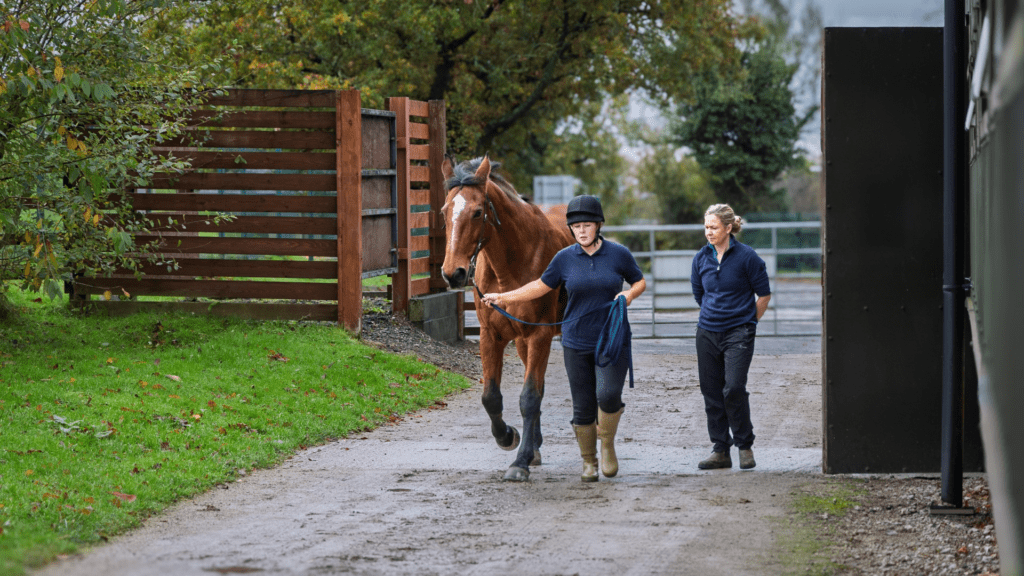
- Watch in motion: a brief trot‑up on a straight line and on a circle (both reins) can reveal head‑bob (front legs) or hip asymmetry (hind legs). Any video footage of this trot-up will help you and your vet review subtle patterns.
- Use your hands: run your hands over your horse’s legs and compare limbs for heat, swelling or sensitivity. Knowing your horse’s “normal” makes any new changes more obvious.
- Share specifics with your vet: age, onset (sudden vs gradual), any training/surface/shoeing changes, and what you’ve already tried all speed up the route to the right treatment.
The takeaway
Your horse’s age is not just a number: it’s a diagnostic advantage.
For older horses, think chronic or degenerative patterns that benefit from thoughtful, long‑term management. For younger horses, think acute injury with focused imaging and rehab. Either way, your careful observations plus your vet’s age‑informed approach will lead to a clearer diagnosis and the right treatment, faster.
Sources & further reading
- Owner‑friendly overview of lameness, causes and the value of a structured exam (MSD/Merck Veterinary Manual). [msdvetmanual.com]
- Behavioural indicators and recognition of subtle lameness signs (British Horse Society; Horses Inside Out). [bhs.org.uk], [horsesinsideout.com]
- Professional outline of the lameness examination, from history to imaging. [msdvetmanual.com]
Footnote
Lameness diagnosis is important for both you and your horse. As an owner, recognising and diagnosing lameness is crucial to ensuring your horse’s long-term soundness. Early diagnosis provides clarity, reduces stress, and helps you and your vet to make informed decisions to support your horse’s health.