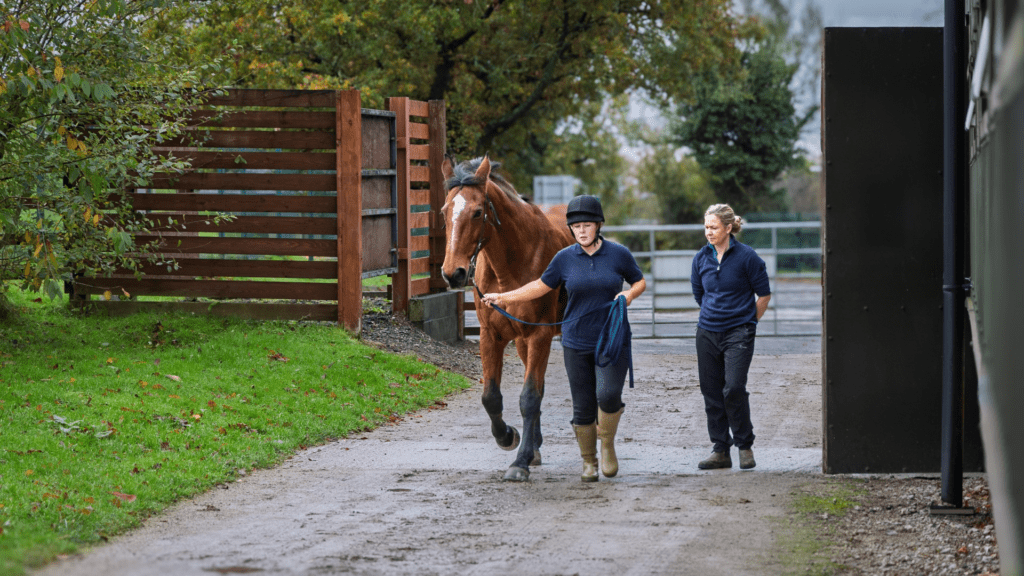
Sometimes a horse looks perfectly fine trotting up and down the yard. But put them on a lunge circle? That’s when subtle issues start to show.
Lunging is one of the most valuable tools in lameness detection – vets use it routinely because the curve of the circle puts extra demand on the limbs and can reveal problems that stay hidden on the straight.
But here’s the thing: you don’t need to be a vet to spot the warning signs.
In this webinar, we’ll show you how to use lunging as a window into your horse’s soundness – whether you’re an experienced lunger or still finding your feet with a lunge line.
You’ll learn:
- Why the circle matters – how lunging stresses limbs differently to straight-line work
- What to watch for – the key signs of lameness on the lunge
- Head nod, hip hike, and more – understanding what your horse’s body is telling you
- Inside leg vs outside leg – why direction changes everything
- Hard surface vs soft surface – and what each can reveal
- What’s normal, what’s not – because even sound horses can look uneven on a circle
We’ll also cover practical tips for getting consistent, reliable results – so you can confidently share what you’ve seen with your vet.