If you think something’s off with your horse, be reassured that the feeling is real. It’s also more common than you think. You’re not overreacting, you’re being a responsible owner but that can sometimes be frustrating, especially if you still don’t have the answers.
If you’ve already done some reading, watched a few videos, compared notes with friends, and still feel your horse isn’t quite moving right, the next best step is a good, honest conversation with your vet. You don’t need to become a lameness expert but providing your vet with clear, calm information will help you move forward with confidence.
Here are five things worth discussing.
Recognising and diagnosing lameness is crucial to ensuring your horse’s long-term health and soundness
1. Share your horse’s lameness story briefly and clearly
You’ve noticed something and – even if you can’t describe it perfectly – start with the basics:
When you first felt or saw the issue
Whether it’s new, inconsistent, or gradually worsening
Anything that has changed recently: surface, workload, farriery, saddle fit, rider, turnout, weather
You’re not expected to have the answers, but offering the broader context is gold dust for your vet. A simple one‑minute summary is often more valuable than an anxious ten‑minute ramble (we’ve all been there).
Helpful phrases to use
“I’m not sure exactly what I’m seeing, but this is when I first noticed it…”
“Here’s what seems to make it better or worse…”
This avoids the feeling of “I don’t want to sound silly,” while giving your vet a strong starting point.
“Remember, there’s no such thing as a stupid question. If you’re thinking it, then it’s important to discuss your concerns.”
Most owners already observe their horses closely, but lameness benefits from structure. Ask your vet what specific things they’d like you to track over the next few days:
Straight line vs circle
Firm vs soft ground
Before vs after warm‑up
Left rein vs right rein
Tired vs fresh
Collecting repeatable bits of information will help your vet narrow things down. This also stops the mental spiral of “It’s different every day, so what if I’m imagining it?” You’re not but keeping a record of what you see is invaluable.
3. Offer videos & ask which view is most useful
Most vets will appreciate a few good video clips rather than one long montage. You could ask:
“What angles or surfaces would you like me to film?”
Your vet may request:
Straight line trot
A circle on each rein
A side on view
A short clip before exercise and one after
This removes the pressure of guessing and reassures you that what you’re providing will actually help.
4. Discuss possible next steps without fear of judgement
This is where many owners worry they’ll sound dramatic, or stupid, or both. But asking about the process isn’t being pushy, it’s being prepared.
Try questions like:
“What are we trying to rule in or rule out first?”
“If today’s assessment doesn’t give us the full picture, what might the next step be?”
“Is this something that might benefit from imaging, or are we not at that stage yet?”
Your vet will walk you through the step‑by‑step reasoning. A lameness work-up is a decision tree, not a guess. Understanding that will help reduce worry and stop you from filling in the gaps with worst‑case scenarios.
5. Ask if imaging could help
Sometimes the clinical exam gives your vet everything they need. Sometimes ultrasound or radiographs (X‑ray) may answer the key question. Other times, especially when deeper soft‑tissue structures are involved or the picture is unclear, MRI becomes the logical next step.
This doesn’t mean you’re jumping ahead. It simply shows you’re open to understanding the full picture and why (or why not) it might help. Feel comfortable asking:
“If imaging becomes relevant, what question are we trying to answer?”
“What would imaging change about treatment or rehab?”
“Would something like MRI give us information that other tools can’t?”
Remember, there’s no such thing as a stupid question. If you’re thinking it then it’s important to discuss your concerns. You’re not asking for imaging, you’re asking for clarity. There’s a difference.
A quick confidence checklist
If you only do three things before your vet visit, do these:
Prepare a short lameness summary: when it started, what you see, what’s changed
Bring 2–3 short videos filmed on safe, consistent surfaces
Have a few focused questions ready so the conversation flows
Your vet will thank you for being prepared with observations that help tell your horse’s lameness story.
And, if your horse could thank you for that, they would!
Footnote…
Lameness diagnosis is important for both you and your horse. As an owner, recognising and diagnosing lameness is crucial to ensuring your horse’s long-term soundness. Early diagnosis provides clarity, reduces stress, and helps you and your vet to make informed decisions to support your horse’s health.
Ever get the feeling that your horse is not “quite right?” Well, the feeling is real, even when you can’t point to one clear moment where they look lame. The goal is not to diagnose at home. It’s to turn a vague worry into a clear, calm set of observations your vet can use.
1. Press pause: take the emotion out of the first check
Before you change everything at once, take a breath and do a quick reset. Ask yourself:
What’s changed in the last 2-3 weeks if anything? Workload, surface, shoeing, turnout, feel, saddle, rider
Is it worse on one rein, on a circle, or a firm surface, or when tired?
Is it new, getting worse, or staying the same?
If your gut says your horse is in pain, or anything looks sudden or severe, call your vet sooner rather than later.
2. Do a simple, repeatable “baseline” check
You’re looking for patterns, not proof. In-hand (if safe) carry out the following checks:
Walk and trot in a straight line on a firm, level surface
Turn each way and repeat
Keep it short and consistent so you can compare day to day
If it shows up more clearly on a circle, note which rein and which surface. That detail is genuinely useful.
A simple, repeatable, baseline check will pay dividends when preparing for a conversation with your vet.
3. Film it and your vet will thank you
A good video means you get the chance to both “show and tell” the vet your findings and can save a lot of guesswork:
Film short clips, not one long shaky video
Get the side view, then from behind, then towards you
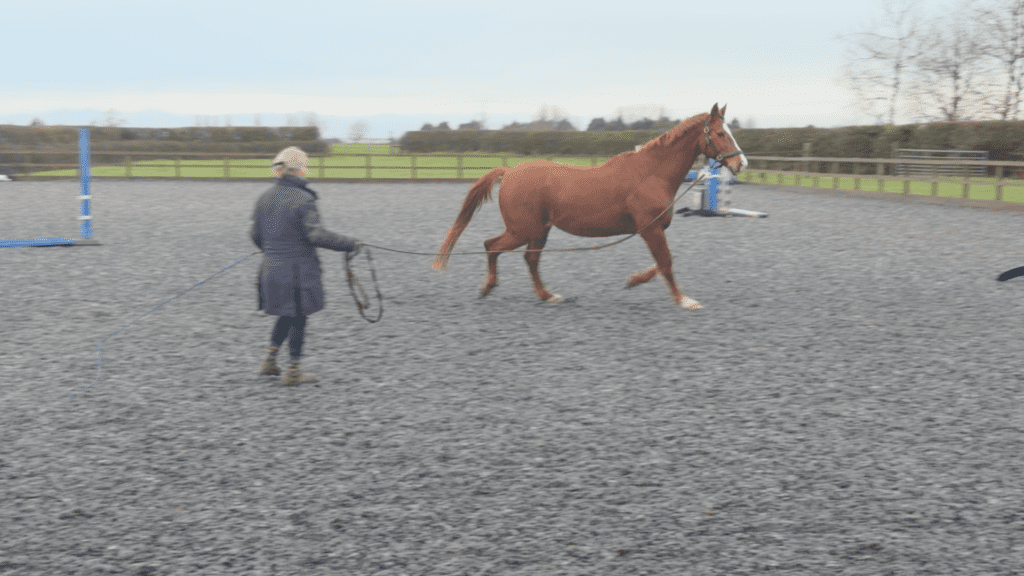
Capture walk, trot, straight line, then a circle on each rein if you can do it safely
Note the surface and whether it’s before or after warming up
“A lameness work-up is usually systematic. Your vet is narrowing down where the pain might be coming from, then choosing the right tools to confirm it.”
You’re basically writing your horse’s lameness story, so your vet does not have to piece it together under pressure.
5. Book the vet conversation and bring a clear summary
When you speak to your vet, aim for:
A one-minute summary of the issue
Your videos
Your 7-day pattern notes
Two or three questions about next steps
If you want a starting point, the most helpful question is often: “What are we trying to rule in or rule out first?”
6. Understand the step-by-step approach so you don’t spiral
A lameness work-up is usually systematic. Your vet is narrowing down where the pain might be coming from, then choosing the right tools to confirm it. That can include in-hand assessment, circles, flexions, hoof testing, nerve blocks and imaging depending on what they find.
This is why it can feel slow. It’s not dithering. It’s precision.
7. If imaging is mentioned, keep it in the “what question are we answering” frame
Sometimes your vet can identify the cause with clinical examination and first-line imaging such as X-ray or ultrasound. Sometimes they need more detail to guide treatment and rehab.
MRI may come up when the picture is still unclear, or when your vet needs to see structures that can be difficult to assess fully with other tools. Standing equine MRI is non-invasive, completely safe and is commonly done with the horse standing and mildly sedated.
If MRI is suggested, useful questions are:
What do you suspect and what would MRI confirm or rule out?
What would change in the plan if we had that information?
Are there other options that make sense first?
8. Give yourself a clear action list
If you only do three things, then do these:
Film 2 short clips: straight line trot, then a circle each rein if safe
Write a 3-line note: when it started, when it is worse, what has changed
Speak to your vet if you are worried, or if it is new, persistent, or getting worse
Want a simple tool you can print? Download our crib sheet on how to talk to your vet about what’s next:
Lameness diagnosis is important for both you and your horse. As an owner, recognising and diagnosing lameness is crucial to ensuring your horse’s long-term soundness. Early diagnosis provides clarity, reduces stress, and helps you and your vet to make informed decisions to support your horse’s health.