Myths about horse lameness abound, especially when people are not armed with the facts. If lameness were always obvious, none of us would spend weeks second guessing what we’re feeling under saddle. Lameness can be subtle, inconsistent and frustratingly hard to describe. That is why myths take hold! They give simple answers to something that is rarely simple.
This article is here to gently clear the air. No judgement, no diagnosis, just a clearer way to think about what you are seeing in your horse and what you can do next.
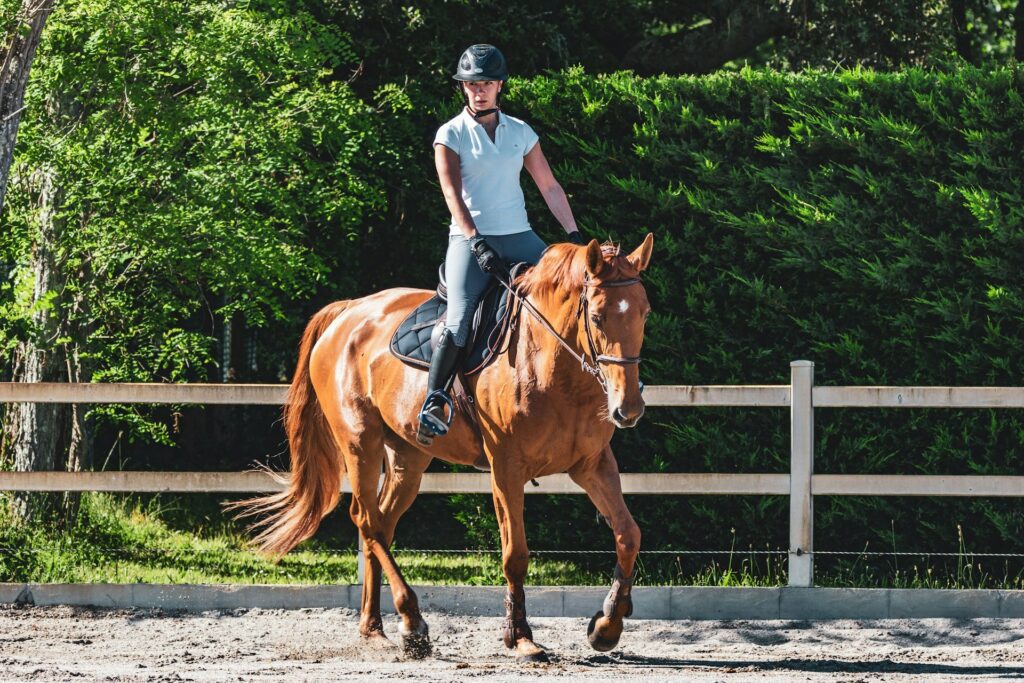
“If lameness were always obvious, none of us would spend weeks second guessing what we’re feeling under saddle. ”

Myth 1 – if my horse isn’t limping, it’s not lame
Why people say it: We picture lameness as an obvious head bob or a clear short step.
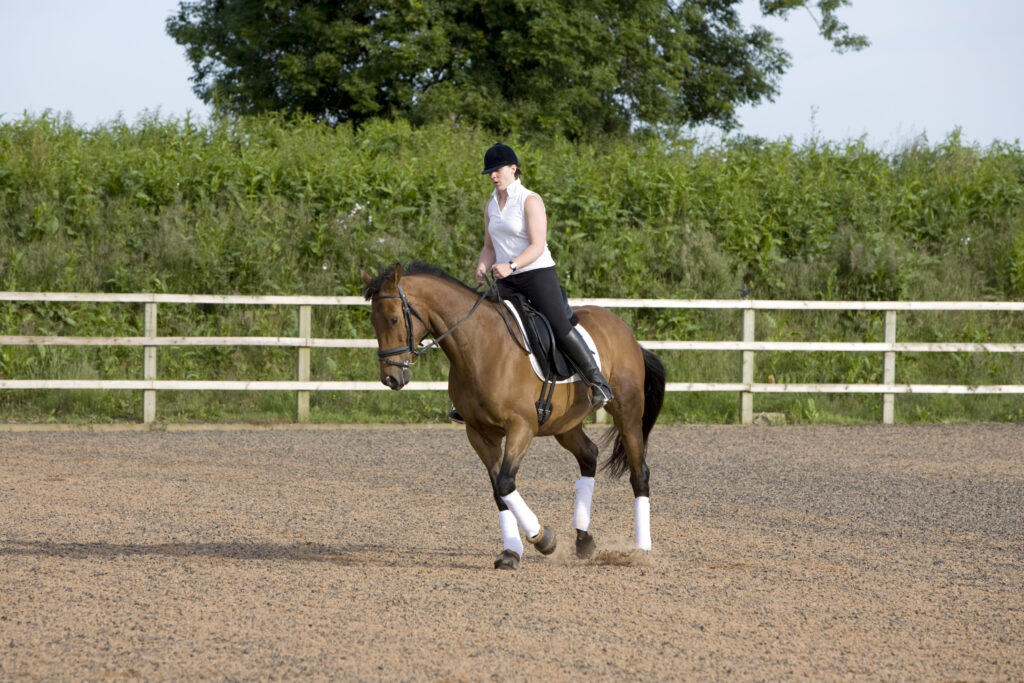
What is usually truer: Not all lameness looks like a classic limp. Some horses stay straight but feel uneven on one rein, struggle in transitions, lose impulsion or change their way of going. Subtle lameness is often more about patterns than one big moment.
What to do instead: Pick one or two consistent checks you can repeat, like straight lines in trot on a firm, level surface, then a circle on each rein. Keep it calm and brief. If you can, take short videos from the side and behind to share with your vet.
Myth 2 – it’s just behavioural
Why people say it: Behaviour is visible. Pain is not. It is easy to label reluctance as naughtiness, stubbornness or a training issue.
What is usually truer: Discomfort can sometimes look like behaviour. Resistance, crookedness, refusing one lead, sudden loss of confidence or a horse that feels “cold backed” can all be ways of saying something does not feel right. That does not mean every training problem is lameness, but it does mean it is worth staying curious.
What to do instead: Swap blame for observation. What exactly changed? When do you notice it most? Is it worse on a circle, on one rein, on hard ground, or when they are tired? Those details help your vet far more than a label.
Myth 3 – if it comes and goes, it can’t be serious
Why people say it: We expect pain to be constant.
What is usually truer: Lameness can be intermittent. Some horses look better after warming up, then worsen with fatigue. Others are fine on grass but struggle on a firmer surface. Some only show it on the lunge, under saddle or when asked for a certain movement. Intermittent does not mean imaginary. It often means the conditions matter.
What to do instead: Instead of trying to catch it in the act, track the pattern. A simple note on your phone is enough: date, work done, surface, rein, gait and what you noticed.
Myth 4 – a bit of a rest will sort it out
Why people say it: Rest feels kind and sometimes it does help.
What is usually truer: Rest can reduce visible signs, but it does not always answer the why. Some problems improve with time and correct rehab. Others return as soon as work resumes because the underlying issue has not been identified. That is why vets use a step-by-step work-up to narrow down where pain is coming from, then choose treatment and rehab based on evidence.
What to do instead: If you are considering rest, do it with a plan and your vet involved. Ask what they want you to monitor, when to recheck and what the next step would be if it returns. In the first instance, they may suggest X-ray or ultrasound. If these first line imaging options don’t deliver any answers, then advanced imaging such as MRI may well be suggested.
Myth 5 – advanced imaging is expensive and only for the worst cases
Why people say it: Advanced imaging can feel extreme and often requires travel to a vet practice.
What is usually truer: ‘Advanced’ simply means a more complicated piece of equipment is used, which is usually not portable, and therefore travelling to a clinic for a day procedure is common. Advanced imaging can include: Scintigraphy (‘bone scan’), Computed Tomography (CT), or Magnetic Resonance Imaging (MRI), and nearly all can be performed while the horse is awake and under mild sedation.
Advanced imaging techniques are recommended because they enable further information to be obtained about soft tissues, bone changes, or both, when a diagnosis hasn’t been reached yet. Advanced imaging shouldn’t be reserved for the worst cases only, however. Depending on chronicity, it’s only used when a lameness is deemed to be at its worst, very severe, or has been going on for a long time; it may be more difficult to identify the primary cause from issues that have developed as a result of the length of time the lameness has been present. Or even when a diagnosis is made, it may be accompanied by a poor prognosis for recovery because of the delay in starting appropriate treatment.
None of this means advanced imaging is the right step for every horse. It simply means it can be a sensible part of the decision-making journey when you vet needs more detail to guide treatment, rehab, or next steps.
What to do instead: If advanced imaging has been mentioned, ask your vet:
- What questions are we trying to answer now?
- What have we already ruled out?
- Which modality would they suggest and why?
A quick reminder
Talk Lameness is for education, not diagnosis. If you’re worried about your horse, it’s always a good idea to speak to your vet.
Footnote
Lameness diagnosis is important for both you and your horse. As an owner, recognising and diagnosing lameness is crucial to ensuring your horse’s long-term soundness. Early diagnosis provides clarity, reduces stress, and helps you and your vet to make informed decisions to support your horse’s health.