Foot pain is one of the most common causes of forelimb lameness, and it can range from a brewing abscess to something more complex like navicular syndrome. The tricky part is that the horse can’t tell you exactly where it hurts. That’s where hoof testers come in.
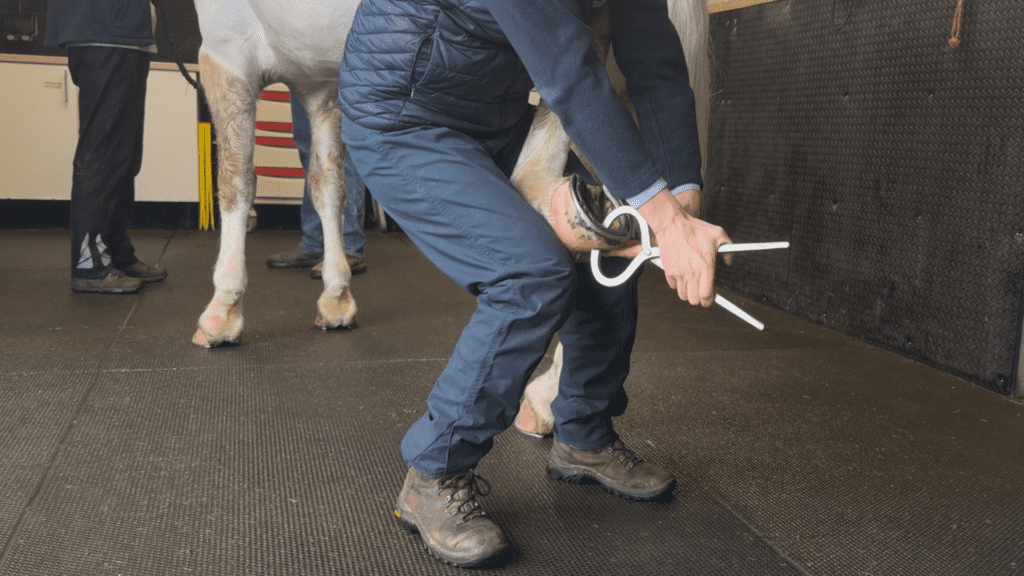
Hoof testers are large, pincer-like instruments designed to apply targeted pressure to specific areas of the hoof. During a lameness exam, the vet systematically squeezes different spots across the sole and hoof wall, watching for a pain response — typically a flinch or withdrawal of the limb. Where the horse reacts can point the vet toward what’s going on inside. Sensitivity over the heel region, for example, may suggest navicular issues, while a sharp response in another area could indicate an abscess or a sole bruise.
It sounds straightforward, but effective use of hoof testers takes real skill and experience. Factors like hoof hardness, sole depth, and even the individual horse’s temperament all influence how they respond. Some horses are stoic and barely react even when in genuine pain, while others flinch at the lightest squeeze. A single withdrawal doesn’t necessarily mean pain — consistent, repeatable responses are what the vet is looking for.
In this video, we’ll show you how veterinarians use hoof testers as part of a lameness workup, what different responses can mean, and why this time-honoured tool remains a valuable first step in tracking down the source of your horse’s discomfort.