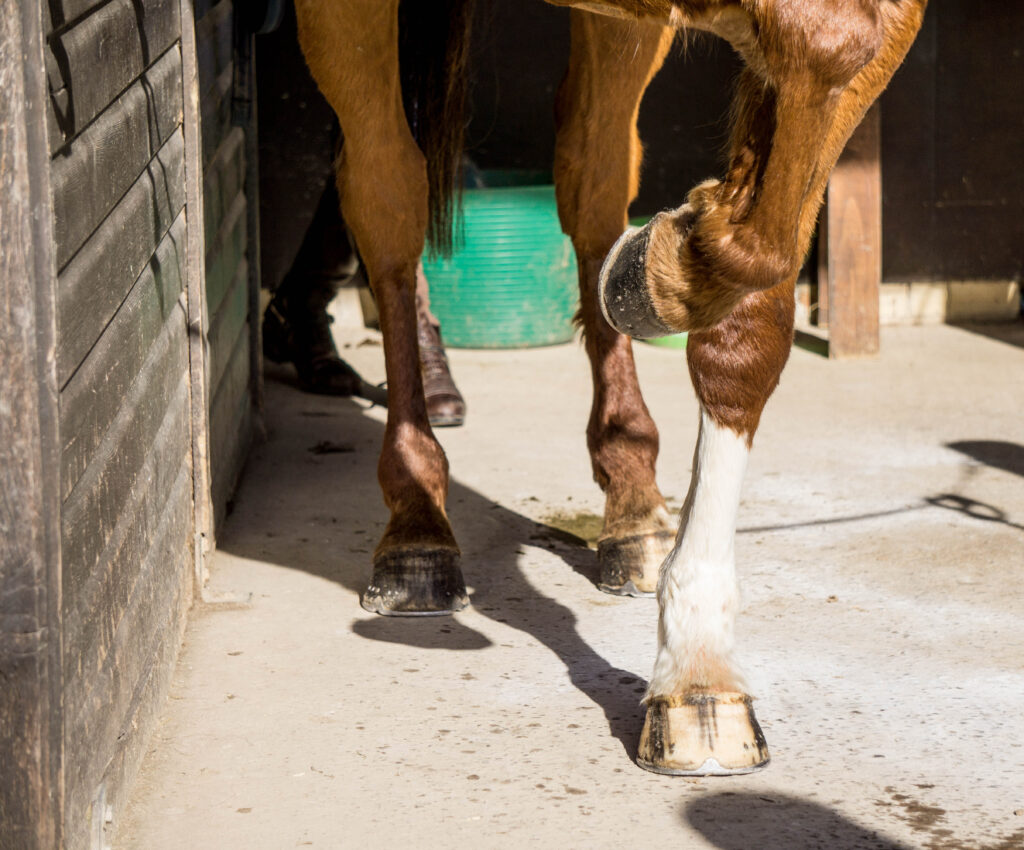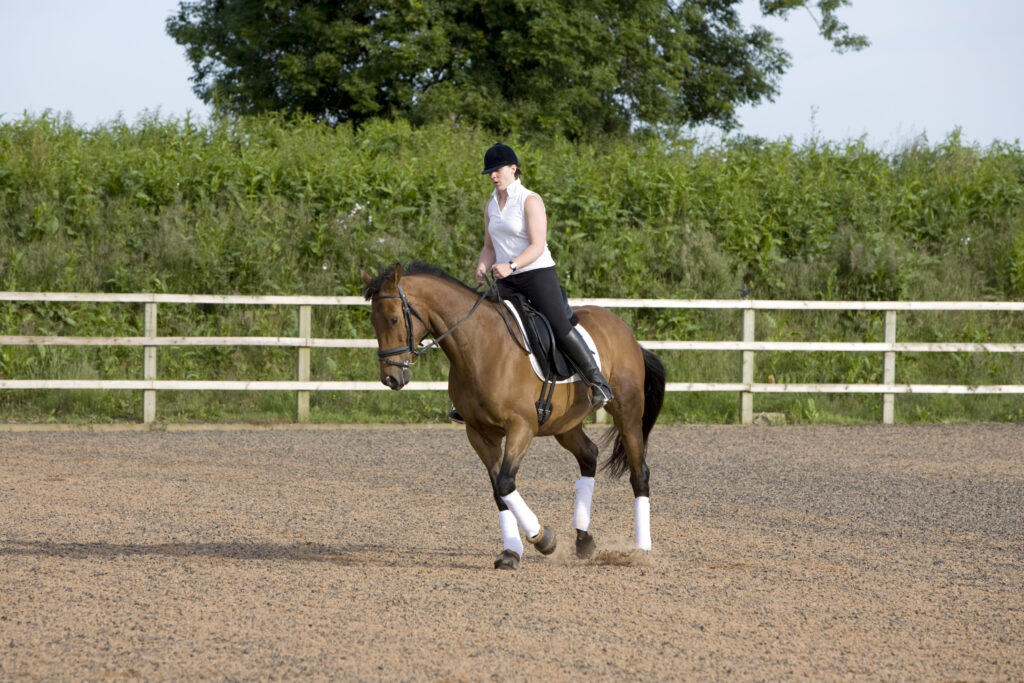
Learning some basic fist aid for lameness – like applying a poultice – will help make a meaningful difference to your horse’s recovery. Whether you’re cooling a swollen limb, or managing a wound with care, these simple first‑aid skills help to ease your horse’s discomfort and help you gather the information your vet needs to make the best decisions.
Applying a poultice
Applying a poultice sits in that practical middle ground between “do nothing and worry” and “try everything and panic”. Done well, it can protect sore tissue, support drainage from the hoof and keep things clean while you wait for professional advice.
The most common reason owners reach for a poultice is a suspected foot problem like a bruise or abscess. Abscesses can cause sudden, severe lameness because pressure builds inside the hoof.
When a poultice is helpful
A poultice can be useful when:
- Your vet or farrier has advised poulticing
- You suspect a hoof abscess and are waiting to be seen
- There is a small, clean area that needs protection and cushioning
If you suspect a puncture wound to the foot, treat it as urgent. Do not remove anything stuck in the hoof and call your vet immediately.
Warm wet, cold or dry?
There are a few approaches to what type of poultice you should use but your vet’s guidance should always come first.
Many owners are advised to use a warm, wet poultice for suspected abscess because it can help soften the sole and encourage drainage. A hot poultice can be applied while waiting for the vet if an abscess is suspected.
Some guides recommend switching to a dry poultice after a couple of days because constant wetting can soften the hoof and make it more vulnerable.
A simple step by step to poulticing
- Prepare the foot: pick out the hoof and gently clean. Keep it practical. You’re not trying to dig for the problem.
- Apply the poultice pad: place it against the sole or affected area as directed.
- Cover and seal: use something waterproof to keep it clean and dry on the outside. Many owners use a hoof boot, duct tape over padding or a purpose-made wrap.
- Make it secure but not tight: the aim is protection and contact, not pressure.
Your horse should be able to stand comfortably. If they’re distressed, unsafe to handle or the leg is very painful to pick up, pause and wait for your vet.
How long to keep poulticing
Duration depends on the reason. Some veterinary practices advise continued poulticing for several days in abscess cases to support drainage and protect the hoof while it heals.
If you’re still wet poulticing after two to three days, check in with your vet or farrier. Over-softening the hoof is a real downside, so you want a plan, not an endless cycle.
What to watch for
- A change in comfort, weight bearing, or heat
- An obvious draining point, often at the sole or sometimes at the coronet band
- A worsening smell, increased swelling up the leg, or your horse becoming dull or feverish
These are all reasons to call your vet promptly.
Where poulticing fits in the bigger picture
Poulticing can help manage a likely foot issue, but it does not replace investigation if lameness persists. After the clinical exam and localisation, vets may use imaging such as ultrasound or radiographs, then consider advanced imaging if needed to fully explain the lameness.
If you’re poulticing and still unsure, the calm question to ask is: what are we trying to rule in or rule out next?
If there’s one message to hold onto, it’s this: first aid is not about fixing the problem on the yard. It’s about protecting your horse, preventing contamination and giving your vet the clearest possible starting point.